Academics
Recognized secondary and senior secondary academic education through the NIOS pathway, providing the formal foundation for future education.
NIOS Secondary · Senior Secondary · Flexible paceAPILS combines the recognized NIOS academic pathway with practical life skills, technology, agriculture, renewable energy, vocational learning, and entrepreneurship — helping students develop the real capabilities to live, work, and thrive independently.
What did you learn?
Measures what can be memorized, written down in a 3-hour exam, and graded on paper — often detached from everyday living capabilities.
What can you do with what you learned? Can you build and manage a productive, meaningful, and independent life?
Measures actual capability, problem-solving, real-world execution, nutritional self-reliance, technical competence, and financial responsibility.
APILS is built on capability, not merely academic achievement. Here is how learning changes when the campus is an active ecosystem.
| Step | Traditional schooling | The APILS living model |
|---|---|---|
| 01 | Learn from textbooks | Learn through NIOS academics and deep inquiry |
| 02 | Memorize formulas | Practice in real campus labs and build software, hardware and systems |
| 03 | Write standardized tests | Operate energy, farm and water grids; create products and services |
| 04 | Graduate with marks only | Earn, lead community solutions, and live independently with confidence |
| Outcome: Students may know the definition of photosynthesis or Ohm’s Law, but cannot grow food, cook a healthy meal, build a circuit, or balance personal finances. | Outcome: A self-reliant young adult with a recognized national secondary credential, capable of feeding themselves, managing energy, using AI, and earning a livelihood. |
Six interconnected domains that equip students with both accredited academic recognition and lifelong capability.
Recognized secondary and senior secondary academic education through the NIOS pathway, providing the formal foundation for future education.
NIOS Secondary · Senior Secondary · Flexible paceStudents develop the practical competencies required for everyday dignity, wellness, self-care, and responsible home management.
Cook · Clean · Budget · Care · Decide · ResolveThe garden is an active classroom. Students understand where food comes from by cultivating crops from seed to table.
Grow · Harvest · Cook · Eat · Sell · AccountThe campus microgrid is a genuine physics lab. Students observe, measure, maintain, and optimize real solar and battery storage.
Generate · Store · Monitor · Use · Maintain · OptimizeWe teach technology as an instrument of creation, not consumption. Students build software, sensors, and hardware.
Garden + Sensors + Software + AI = InnovationEducation must connect to livelihood. Students learn how economic value is created, priced, managed, and ethically sustained.
Produce · Value · Price · Sell · Account · ReinvestSchool + farm + workshop + tech lab + energy grid + enterprise. Every part of the campus is a place to learn by doing.

Vegetables, herbs, and paddy cultivated directly by students as a living biology and agronomy laboratory.
Students generate, monitor, store, and optimize renewable solar power for the campus facilities.
Automated drip irrigation, pond aquaculture, and rainwater harvesting managed through smart soil sensors.
Students write software, program microcontrollers, build sensor networks, and create AI problem-solvers.
Cooking, balanced nutrition, meal planning, and food safety mastered as essential independent-living habits.
Woodworking, electronics repair, metal fabrication, and machine maintenance for everyday independence.
Students package campus harvest, sell products, manage real revenue, handle banking, and balance accounts.
Recognized secondary and senior secondary curriculum, studied with deep context and flexible pacing.
NIOS credential + APILS capability = an independent graduate.
Recognized by the Ministry of Education, Govt. of India. Secondary and Senior Secondary certification valid for university admissions and employment throughout India.
Independent living, daily nutrition, organic farming, renewable energy, coding, robotics, vocational trade crafts, personal finance, and enterprise literacy.
Equipped with both valid national academic credentials and the practical capabilities to take care of themselves, support family, and build a livelihood.
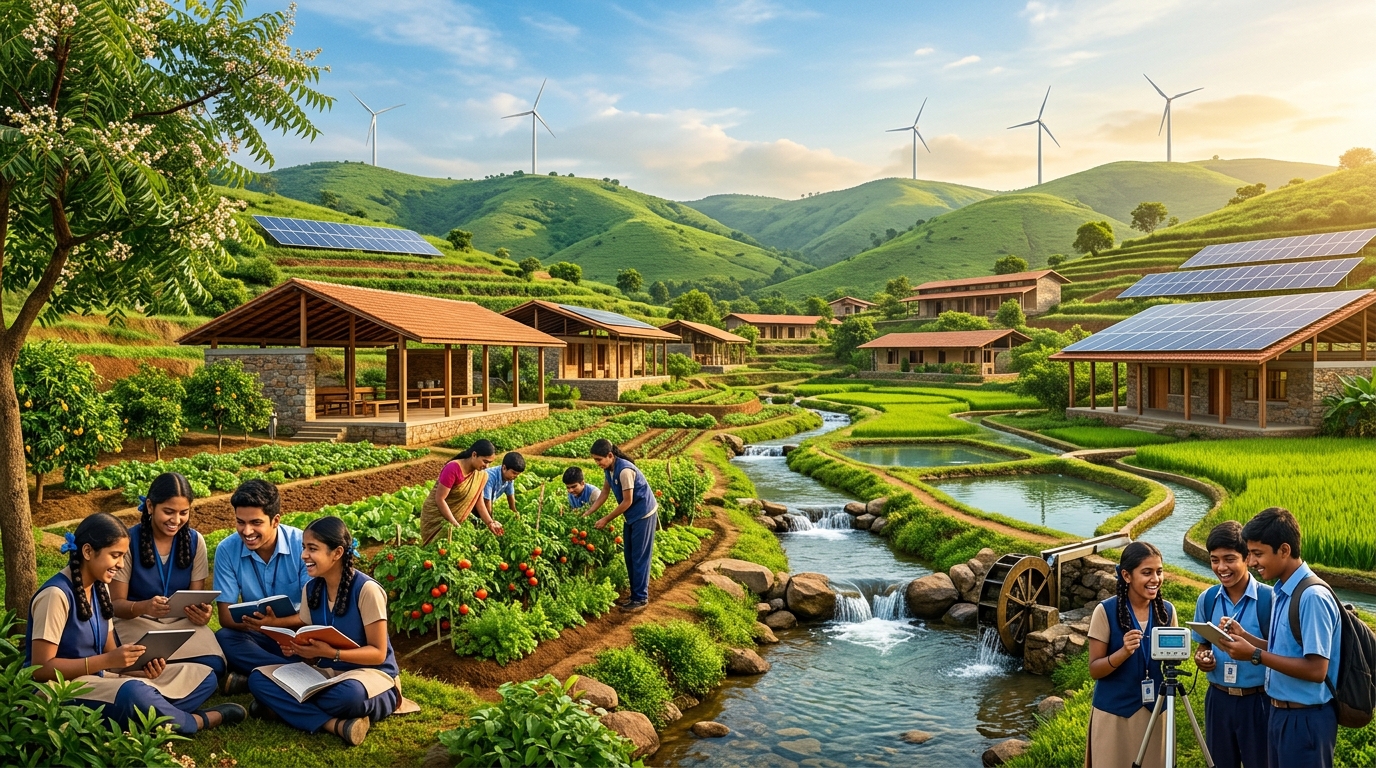
Education at APILS is tangible and alive. Step inside our organic farms, solar microgrid labs, and student enterprises in the foothills of Andhra Pradesh.
Our gardens are not extracurricular — they are an active biology, mathematics, and nutrition laboratory. Students calculate seed germination ratios, balance soil microbes with vermicompost, and harvest fresh organic produce for the campus dining hall.
Explore campus living systems
In our open-air workshop overlooking terraced farmland, students solder IoT environmental sensors, code microcontrollers, and test solar panel voltages under real sunlight — building solutions for agriculture, water, and alternative energy.
Discover the AI & robotics lab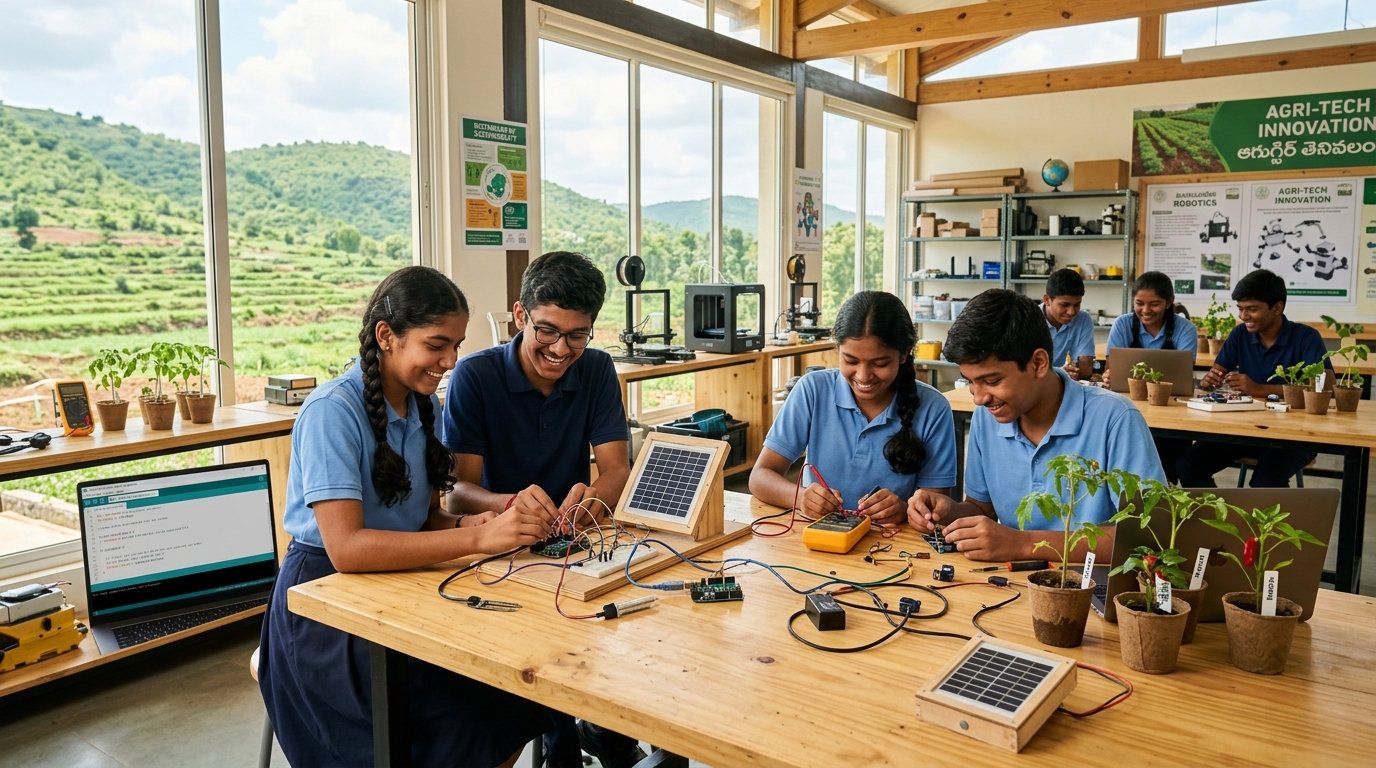
Every week, students operate the campus farmers market — weighing harvest, calculating input margins, handling digital and cash transactions, and balancing ledgers. In the solar kitchen, they prepare healthy, balanced meals and learn habits that last.
Discover student enterprises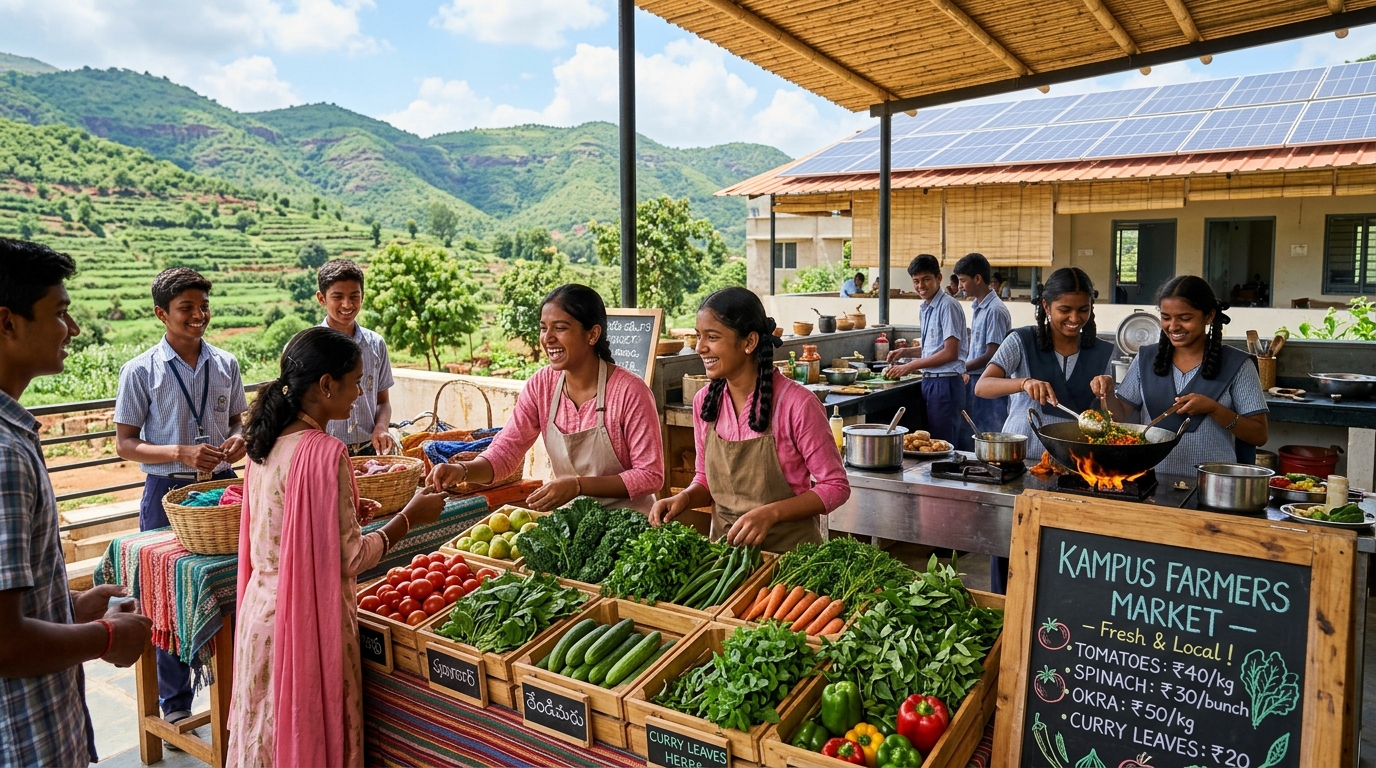
Apply for admission or send us an enquiry and we will get back to you.